10 Years of Bridging Community to Nature |
In 2026, the Ottawa County Parks Foundation proudly celebrates 10 years of Bridging Community to Nature.
Throughout the year, our e-newsletter will highlight milestones from the past decade, share reflections from members of the Foundation’s founding Board of Directors, and showcase the lasting impact your generosity has made across Ottawa County Parks. Here’s to 10 years and the many more to come. |
2024
Thanks to the generosity of our donors, the Ottawa County Parks Foundation funded a community values assessment to support strategic planning, committed annual support for natural resources management, improved accessibility at
Ottawa Sands with benches, and supported the Idema
Explorers Camp. The Foundation launched an annual commitment to health and wellness initiatives, which helps more people connect with nature and enjoy its many benefits. |
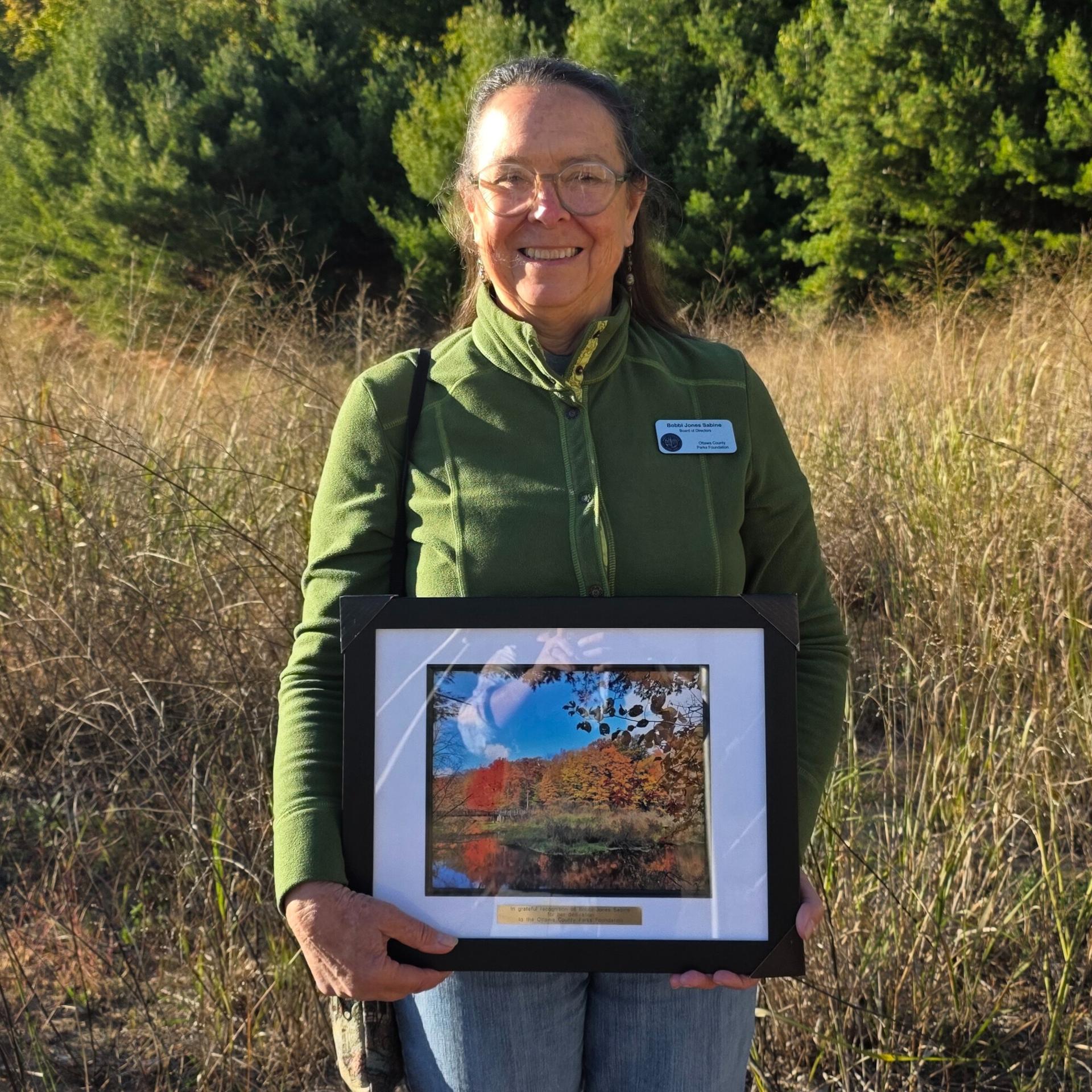
Bobbi Sabine
"After serving 12+ years on the Parks Commission, I wanted to stay involved with the County Parks, and I had a good understanding of their goals and needs. I knew with an organized fundraising group, we’d be able to help expand the services and programming, and also rally the troops when an unexpected opportunity came along – like Ottawa Sands and the Rosy Mound expansion, to name just a couple. We also wanted to provide an avenue for donations that qualified as tax-deductible for our supporters." - Bobbi Sabine
This month, we’re featuring Bobbi Sabine, who served on the Ottawa County Parks Foundation Board from its founding through 2025. Bobbi served as the Foundation’s Vice President from its founding through 2018, when she became President. She served as President from 2019 through 2022, helping guide the Foundation through a period of growth and continued impact. Although her Board service concluded in 2025, Bobbi continues to support the Foundation as a member of the Communications Committee and through her weekly Foundation feature on WAWL. We’re grateful for Bobbi’s years of leadership, dedication, and continued commitment to Bridging Community to Nature.
Read more about Bobbi here.
|
|
| |
|
Featured Park: Riverside
With nearly one mile of frontage along the south bank of the Grand River, this 64 acre park is the perfect place for picnicking, boating or fishing. The park includes a boat launch (fee required), picnic shelter, large pond with a barrier free fishing dock and over 1,000 feet of grassy picnic area along the riverbank. Fishing is allowed along the riverbank and from the edge of the pond.
Learn more
|
|
| |
|
Plant of the Month: Common Evening Primrose |
by Bobbi Jones Sabine
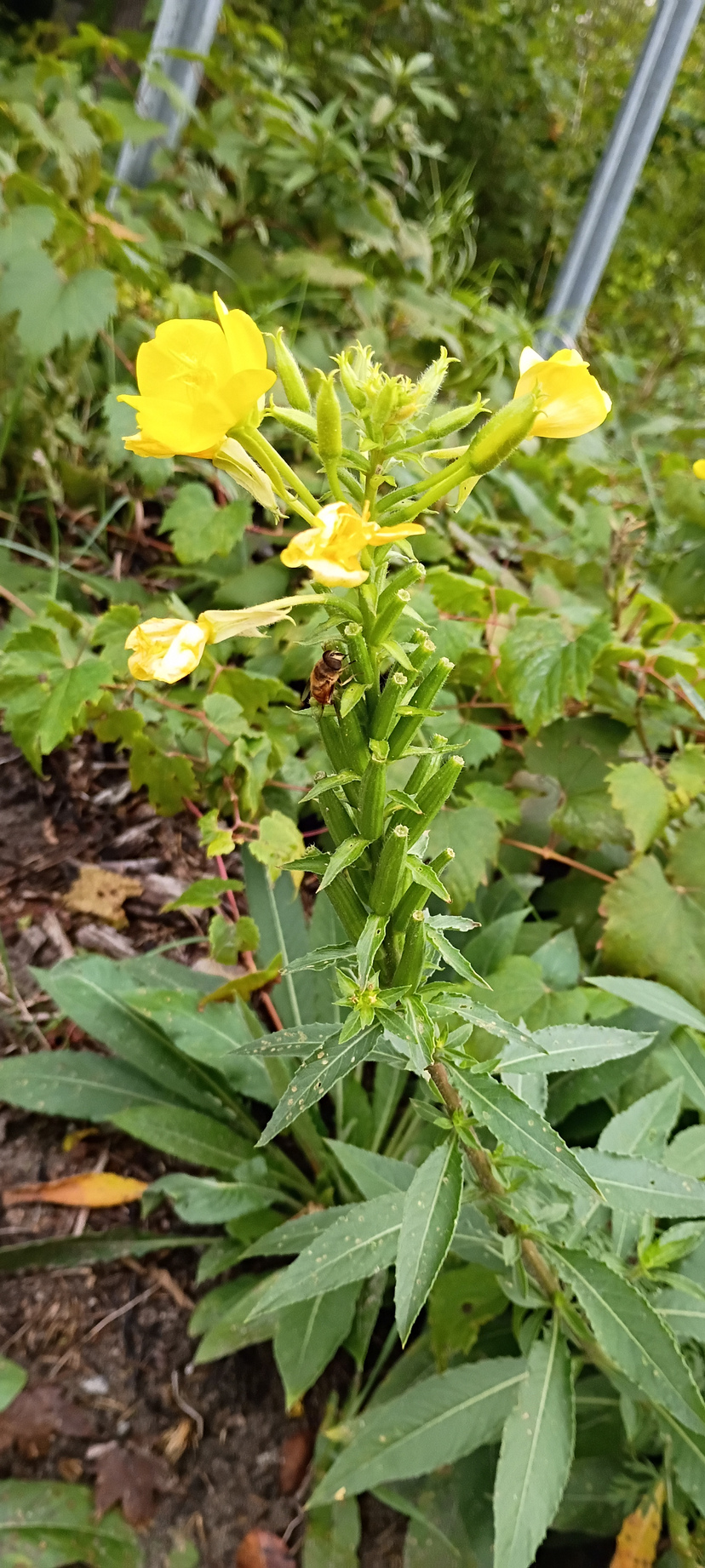
Common evening primrose (Oenothera biennis) is a biennial forb flowering well into October, usually around 2 feet tall, but it can get up to 6 feet tall under the right conditions. Despite its name, it isn’t a true primrose, but does have flowers that open at dusk.
In its first year it forms a basal rosette of leaves, then in the second year it produces a stalk and flowers. The yellow flowers come on a few at a time sequentially up the stem, which can branch out on larger plants. It occurs in upland in sandy roadsides, fields, clearings, and disturbed ground, and sometimes on streambanks or borders of forests. The fruit is a narrow capsule that splits into four parts when mature, making it an easily identifiable plant in winter. Oil can be extracted from the seeds.
Also known as evening star, sundrop, rampion, hog weed, and fever-plant, it has been recorded throughout our state and throughout most of the U.S. and Canada except high-altitude areas. It’s a minor winter food source for birds. It reportedly has strong nectar guides visible under UV light for moths and bees. It’s pollinated primarily by night-flying moths and is a larval host for primrose moth and sphinx moth.
Indigenous people used the entire plant, with roots eaten like potatoes, leaves cooked as greens, and shoots eaten raw. Tea made from the leaves was used to reduce fatigue. |
|
| Photo credit: Bobbi Sabine |
|
|
|
Our Contact Information
*{{Organization Name}}*
*{{Organization Address}}*
*{{Organization Phone}}*
*{{Organization Website}}*
|
| |
|
You are being sent this email because you are a subscriber.
If you wish to update your Email Preferences or Unsubscribe, click *{{Unsubscribe}}* |
|
|
|
|