by Bobbi Jones Sabine
Highbush cranberry (Viburnum trilobum) is a native shrub found on borders of forests and shores, in moist soil of roadsides and ditches, on banks of rivers, and other moist ground. It is a flood-tolerant species which can thrive in areas with fluctuating water levels. Its extensive root system helps stabilize soil and reduce erosion.
It has been found in nearly every county in both the upper and lower peninsulas of Michigan. It also occurs in every state in the northern part of the U.S., from Washington to Maine, and throughout Canada. Once thought to be a subspecies of Viburnum opulus, very recent genetic studies (Tork et al, 2025) have shown that the two species are distinct entities.
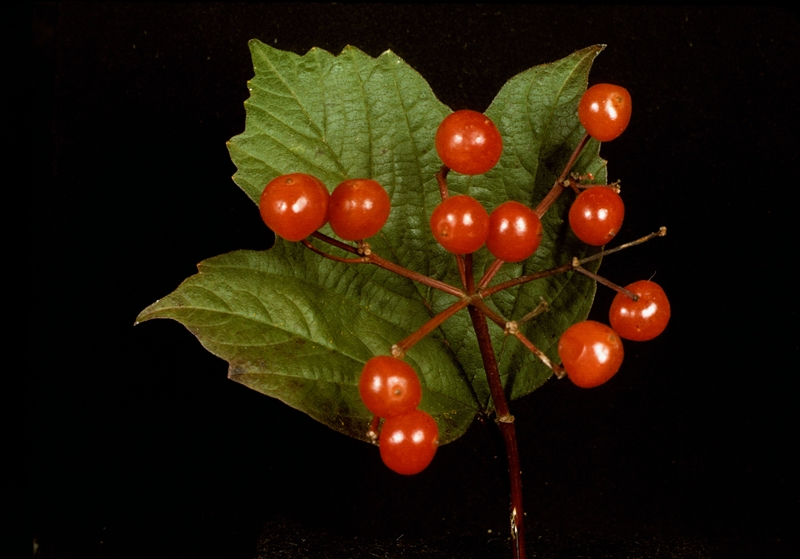
The leaves resemble a maple leaf with three distinct lobes (hence “trilobum”). A dense, multi-stemmed, branching shrub, it has bright red cranberry-sized berries which are beautiful in the fall. It also provides food for birds and other wildlife, as well as cover and nesting habitat.
The tart berries, when cooked, make a flavorful addition to jams, jellies, pies, and sauces. They are rich in Vitamin C and taste somewhat similar to cranberries, but have one large seed instead of many small ones. Do not confuse these with the firmer berries of Viburnum opulus, which are highly astringent and cause some unpleasant side effects.
Also called crampbark, the bark has been found to contain viburin, a muscle relaxant, and was used by Native Americans to relieve muscle cramps and headaches.