by Bobbi Jones Sabine
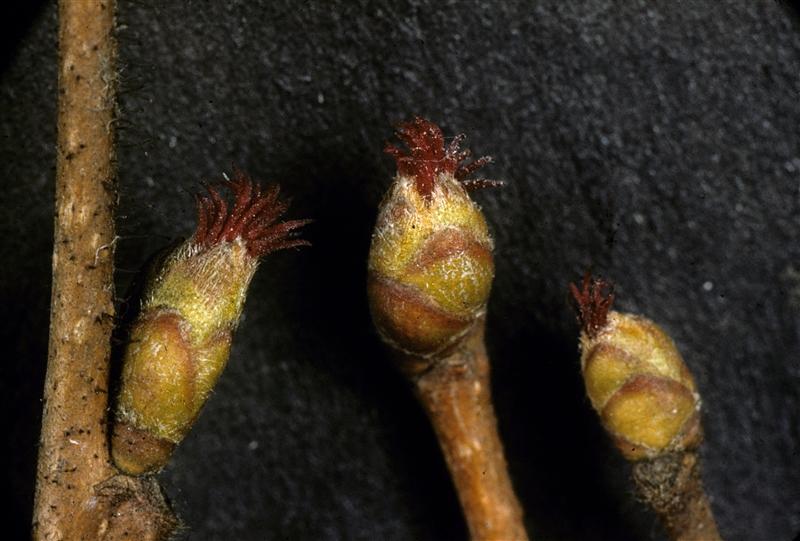
If you’re desperately looking for signs of spring, seek out American hazelnut (Corylus americana), one of the first shrubs to bloom. The tiny red flower stigmas at the end of the buds aren’t exactly spectacular, but are a welcome sight anyway, followed by catkins, then nuts months later. In Michigan, it’s found mostly in the lower half of the lower peninsula, with a few scattered populations in the U.P. along the Wisconsin border. It occurs throughout the eastern U.S. and eastern Canada.
Hazelnut, also called filbert or cobnut, is a native shrub found in a range of habitats from dry savannas to riverbanks, forest edges, and thickets. It sends out shoots and forms clones, with the leaves of young sprouts near ground level sometimes showing a purple splotch along the leaf midrib.
In traditional medicine, hazelnuts have been used for digestive aids, astringent and anti-inflammatory properties, skin care, heart health, bone strength, and brain support. They are rich in many vitamins, as well as calcium, magnesium, manganese, and healthy fats.
In Celtic folklore, hazelnut was associated with wisdom and inspiration, with its nuts believed to bestow magical insights. Historically, hazelnuts were not only a staple food but also a key ingredient in numerous remedies aimed at boosting energy, supporting digestion, and enhancing overall vitality. The wood has been used in crafts and agricultural tools, making hazelnut an integral part of rural life for centuries.